Martin County Tap Water: Common Concerns and Past Findings
If you live in Martin County, a change in taste, a water notice, or an older report can leave you unsure what applies to your tap today. The key is to separate verified information about the water system from changes that may come from household plumbing. Here’s how to check the right records, respond to common concerns, and decide what to ask next.
What is known about Martin County water concerns
The Kentucky Energy and Environment Cabinet says the Division of Water and multiple stakeholders address drinking water issues in the Martin County Water District through a workgroup. That confirms the district’s water issues have received coordinated attention. It does not, by itself, identify a particular contaminant, describe current tap-water conditions, or say whether a concern affects every customer.
That distinction matters. A workgroup’s existence is useful context, but it is not a substitute for current utility information. Likewise, an older finding may explain why an issue was investigated without showing whether the condition remains, how it was addressed, or what applies at a specific home now.
When reviewing a concern, try to answer three separate questions:
- What was reported? Look for the specific substance, operating issue, or service concern described in the record. A general reference to water issues does not tell you what was measured or observed.
- When and where did it apply? Check the date, system or service area, and whether the information concerns a utility-wide issue, a particular location, or an individual tap.
- What is the current status? Look for later sampling, follow-up notices, corrective actions, or updated reports. If the record does not explain the status, ask the water provider or the relevant state office rather than assuming the problem continues or has been resolved.
A community water system report and a household test also answer different questions. Utility monitoring describes samples collected under the system’s monitoring program. A test taken at a home can help assess water at that sampling point, including possible effects from the home’s plumbing. Neither source automatically answers every question about water somewhere else in the service area.
For a broader explanation of how to find records and understand where public water comes from, see Guide to Kentucky Drinking Water: Sources, Reports, and Safety. To look up the provider responsible for a particular address, Who Is My Water Provider? Finding Your Kentucky Tap Utility can help you confirm where to direct questions.
How to check current information instead of relying on old findings
Start with the information that applies to your address and the concern you have. If the issue is a system notice, use the provider’s current notice or customer information. If you want to understand routine monitoring, request or review the applicable water quality report. If the question is whether a pipe or faucet at home is affecting the water, utility-wide results alone may not settle it.
A practical review can follow this sequence:
- Confirm your water provider. Do this even if you know the name commonly used in your area. Service boundaries and account arrangements can be confusing, especially after a move or when a property has a private supply. Ask the provider whether your address receives its water.
- Identify the specific issue. Write down what you noticed or what the record says: a taste or odor, discoloration, a boil notice, a test result, or a named contaminant. “Water quality problem” is too broad to guide an effective follow-up.
- Check the date and location. A notice or finding may relate to a past event or a limited part of a distribution system. Confirm whether it is current and whether your address is included. Do not assume that a past notice applies now, or that a notice affecting another area covers your home.
- Read the full report, not just a headline. Look for the substance measured, the reported result, the monitoring period, and any explanation of follow-up. A result’s meaning depends on what was tested and how the report describes it.
- Ask the provider what changed afterward. If a past report or public notice leaves the status unclear, ask whether follow-up testing or corrective action was recorded and what information applies to your address.
- Consider a home test when the question is local to your plumbing. First identify what you want to learn. Use a laboratory or testing service appropriate for that question, and follow its sampling instructions. A general-purpose test or a single reading may not answer a specific concern.
- Keep the records together. Save reports, notices, test results, and messages from the provider. A simple timeline can help you distinguish an old condition from a new change and make follow-up questions more precise.
Annual reports are useful, but they are not a live monitor of every tap. They summarize information for a defined reporting period and may not address a recent interruption, a new odor, or a plumbing issue in one building. For help interpreting the parts of an annual report, see Understanding Your Kentucky Water Quality Report and CCR Data and How to Read Detected Contaminants on a Water Report.
For searchable state records, Drinking Water Watch: Checking Kentucky Public Water Online Records may help you locate public-system information. Treat online records as a starting point: confirm unclear or current details directly with the provider or the agency responsible for the record.
| What you are trying to find out | Useful information to check | What it may not answer |
|---|---|---|
| Whether a system issue is current | The provider’s latest notice and direct response | Whether a home’s own plumbing is contributing |
| What routine monitoring found | The applicable water quality report and public records | Whether a recent change occurred after the report period |
| Whether your address is affected | Provider confirmation of service area and notice coverage | The condition of a specific faucet or fixture |
| What is happening at a home tap | A suitable sample collected according to lab instructions | Conditions across the whole distribution system |
| Whether an older finding was followed up | Later reports, notices, or provider confirmation | Current status if the follow-up record is unclear |
Common concerns and how to sort them out
A change in water does not automatically point to a particular contaminant. Taste, smell, appearance, pressure, and test results are different kinds of clues. Some may relate to the water system, while others may be associated with plumbing inside a building. The goal is not to diagnose a cause by sight or smell; it is to record what changed and find the right person or record to assess it.
Taste or odor changes
Note whether the change affects cold water, hot water, or both, and whether it occurs at one faucet or throughout the home. Check whether neighbors report a similar change, but do not use their experience as proof of what is happening in your plumbing. Contact the water provider about a sudden or persistent change, especially if it affects several taps or appears to coincide with a utility notice.
A taste or odor alone does not identify the substance responsible. If the provider cannot explain the change, ask what testing is appropriate and whether a certified laboratory should analyze a home sample. For a sudden gasoline or chemical-like smell, use Gasoline or Chemical Smell in Tap Water: What to Do Fast for immediate steps and contact the provider through its official channels.
Discolored, cloudy, or sediment-filled water
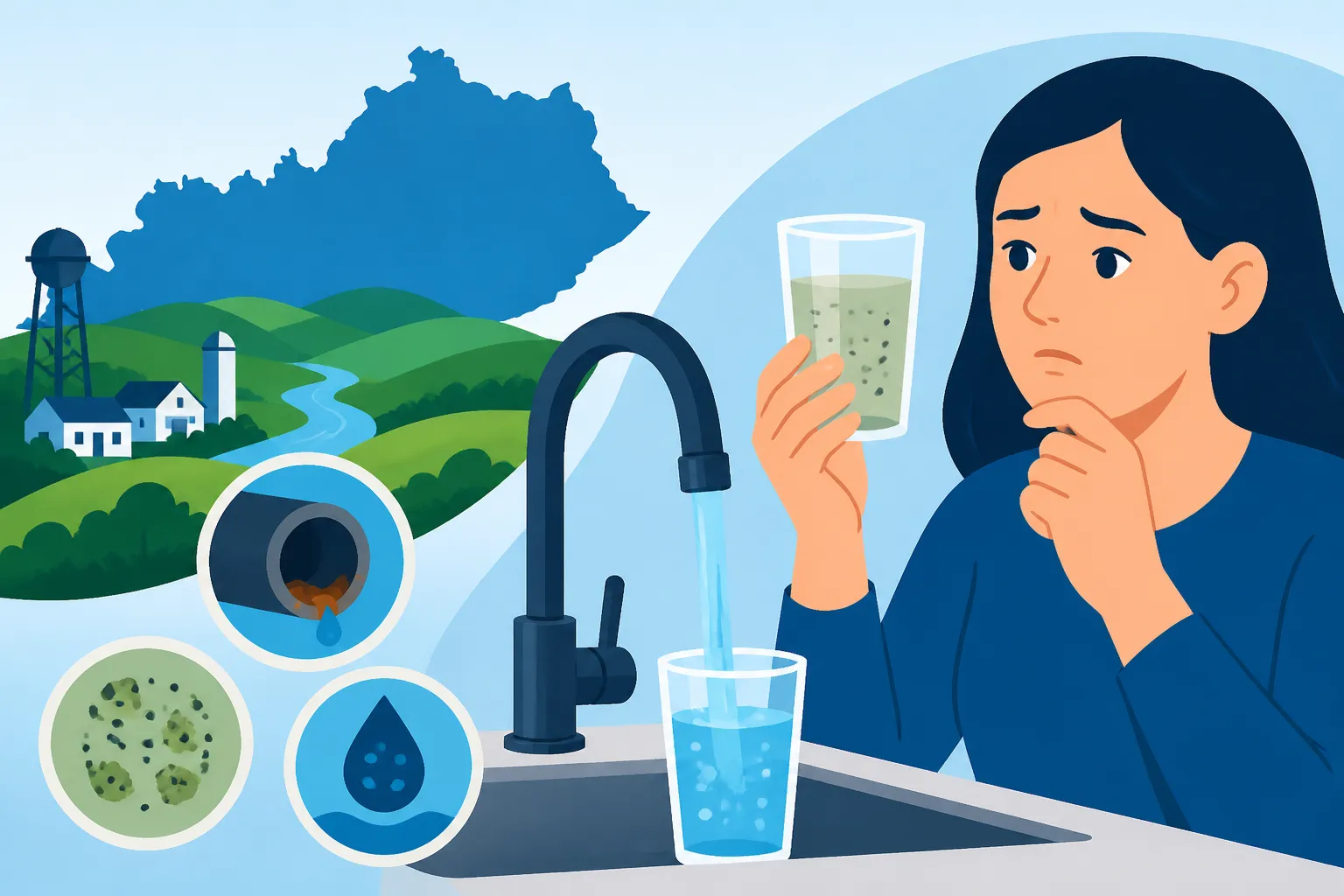
Describe the color, whether particles settle, and whether the change appears at one faucet or across the home. Check both hot and cold taps without drinking water that appears unusual. If the change is sudden, widespread, or follows a service interruption, contact the provider and ask whether it is aware of a system event and what customers should do.
Discoloration is not a reliable way to determine whether water is safe or to name a contaminant. Avoid treating a filter as a diagnosis. A filter designed for one substance may not address another, and a device’s claims should be matched to suitable test results and the product’s certification. For practical ways to distinguish a possible home issue from a wider event, see Sudden Discolored Tap Water: How to Identify Main vs Home Causes.
Pressure loss or a service interruption
A drop in pressure can be inconvenient and may accompany utility work, a local plumbing problem, or another interruption. Ask the provider whether there is a current notice for your area and whether it has issued any instructions for water use. Follow the provider’s current notice rather than relying on a neighbor’s recollection or an old social media post.
If the provider confirms a boil-water advisory, follow its instructions until it says the advisory has ended. Boiling is not a universal response to every water quality concern, so do not boil water simply because it tastes different unless a notice or qualified professional tells you to. See Kentucky Boil Water Advisories: Safety Rules and Disinfection Steps for how to respond to an advisory.
Concerns about lead or older plumbing
A utility report cannot establish the condition of every pipe, faucet, or solder joint inside a home. If your concern involves older plumbing or a service line, ask the provider what information it has about the service line serving your address. A home test can address water at the sampled tap, but correct collection and appropriate laboratory analysis matter.
Do not assume that clear water has no lead, or that a utility-wide result represents the water from every household fixture. If lead is a concern, use a testing approach designed for lead and follow the laboratory’s sampling instructions. Lead Pipes and Tap Water Safety: Guide for Kentucky Residents explains why the service line and home plumbing deserve separate attention.
A report with unfamiliar results
A report may include substances that were monitored even when the results do not indicate a current problem. Read the explanation provided with the result and check the report period and sampling location. If the language is unclear, ask the provider to explain what was detected, what the result means in the report’s context, and whether any follow-up applies to your address.
When asking about health implications, contact your local health department or a medical professional. A water report can provide monitoring information, but it is not a personal medical assessment.
What to ask the provider, and when to test at home
A focused question is more useful than asking whether the water is simply “safe.” It gives the provider a chance to respond with information about the relevant record, notice, location, or sampling. If the answer does not address your concern, ask who maintains the next record you need or which testing route is appropriate.
Useful questions include:
- Does the current notice or finding apply to my address?
- What date and sampling location does this information cover?
- Is there a later report, follow-up sample, or corrective-action update?
- Is the issue associated with the public water system, or should I also investigate my building plumbing?
- What should I do while the issue is being checked?
- If I need a home sample, which contaminant or property should the laboratory test for?
- Does the provider have information about the service line serving my property?
- Where can I find the provider’s current water quality report and customer notices?
Keep a record of the date you contacted the provider, the description you gave, and the response. If the provider directs you to an agency or laboratory, confirm that you are contacting the appropriate office for the particular question. The official utility or agency website is the right place to find current contact details.
Home testing makes sense when the question is specific and a sample can answer it. For example, a concern about water at one faucet may call for a different sampling plan than a concern about the system’s overall monitoring. Before paying for testing or buying treatment equipment, ask the laboratory what its analysis covers, how the sample must be collected, and what the results can and cannot establish. A screening device or sales demonstration may not be equivalent to laboratory analysis.
If a report identifies a substance you want to reduce, check whether a treatment device is certified for that reduction and whether its capacity and maintenance requirements fit your use. Do not assume that a filter marketed for taste or sediment also reduces a chemical or metal. Compare the product’s certification with your test results, and retest when appropriate to confirm whether the treatment is performing as intended. For help understanding this choice, see Kentucky Home Water Treatment and Certified Lab Testing.
A test result is only as useful as its sampling method and interpretation. Follow the lab’s directions carefully, use its sample container if provided, and avoid drawing conclusions from a test that was not designed for the question. If results differ between taps or from the provider’s report, ask the lab and provider what the difference could mean before making a treatment decision.
Renters, homeowners, and keeping up with notices
The next step can depend on whether the concern appears to involve the public system or the building. A provider can explain system records and notices. A landlord, property manager, or plumbing professional may need to address a building fixture or internal plumbing issue. Keep those roles distinct so a question about a faucet does not get lost as a general system complaint, and a system notice is not treated as a private plumbing problem.
If you rent, notify the landlord or property manager about a persistent change inside the unit and keep a written record of the report. Contact the provider directly when the concern may involve a system-wide change or when you need to confirm whether a notice covers your address. Check your lease and building rules for the right way to request plumbing work; do not assume who is responsible without reviewing those terms.
Homeowners can document which fixtures are affected, whether the change occurs with hot or cold water, and whether the timing matches a notice or service interruption. If a plumber inspects the property, keep the findings and any repair details alongside utility records. A plumbing inspection and a water-quality test answer related but different questions.
To avoid missing a relevant notice:
- Check the provider’s official website for current alerts and customer information.
- Ask the provider how customers at your address receive urgent notices.
- Keep contact details for the account current if you are the account holder.
- If you rent, ask the landlord or manager how notices are shared with residents.
- Confirm a notice’s coverage area before applying it to your home.
- Keep a copy of the notice and any instructions until the provider confirms the issue has ended.
For renters who may not have an account with the provider, Kentucky Renter Boil Notices: How to Get Alerts Without an Account offers more specific guidance. If the concern involves a change in tap water while renting, Renting in Kentucky? Who to Contact When Tap Water Changes can help you separate utility questions from building-related ones.
Most importantly, do not use an old report or an unverified post as a substitute for current instructions. A past finding may matter for understanding the system’s history, but current notices and follow-up records are what help establish what customers should do now.
Frequently Asked Questions
Does the workgroup mean the water is unsafe now?
No conclusion about current tap water follows from the workgroup’s existence alone. The Kentucky Energy and Environment Cabinet says the Division of Water and multiple stakeholders address drinking water issues in the Martin County Water District through a workgroup. For current conditions and instructions, check the provider’s latest information and applicable state records.
Do past findings apply to every home in Martin County?
Not necessarily. A finding may concern a particular sampling location, period, or part of a system. Check the record’s scope and ask the provider whether it applies to your address.
Should I test my tap water?
Consider testing when you have a specific question that a suitable sample can answer, such as a concern about a particular tap or home plumbing. Ask a qualified laboratory what to test for and how to collect the sample. A single general test does not assess every possible concern.
Should I boil water when the taste or color changes?
Not unless the provider or a current official notice instructs you to boil it. Boiling is not an all-purpose solution for water-quality concerns. Contact the provider about a sudden or persistent change and follow its current directions.
Sources
- Kentucky Energy and Environment Cabinet — Division of Water – Kentucky Energy and Environment Cabinet (checked November 14, 2026)
Disclaimer
This article is for general informational purposes only and does not constitute professional advice. Laws, prices and regulations vary by location and change over time. Consult a qualified professional for guidance on your specific situation. Kentucky Water Guide is not a government agency or water utility and is not affiliated with any public water system.